
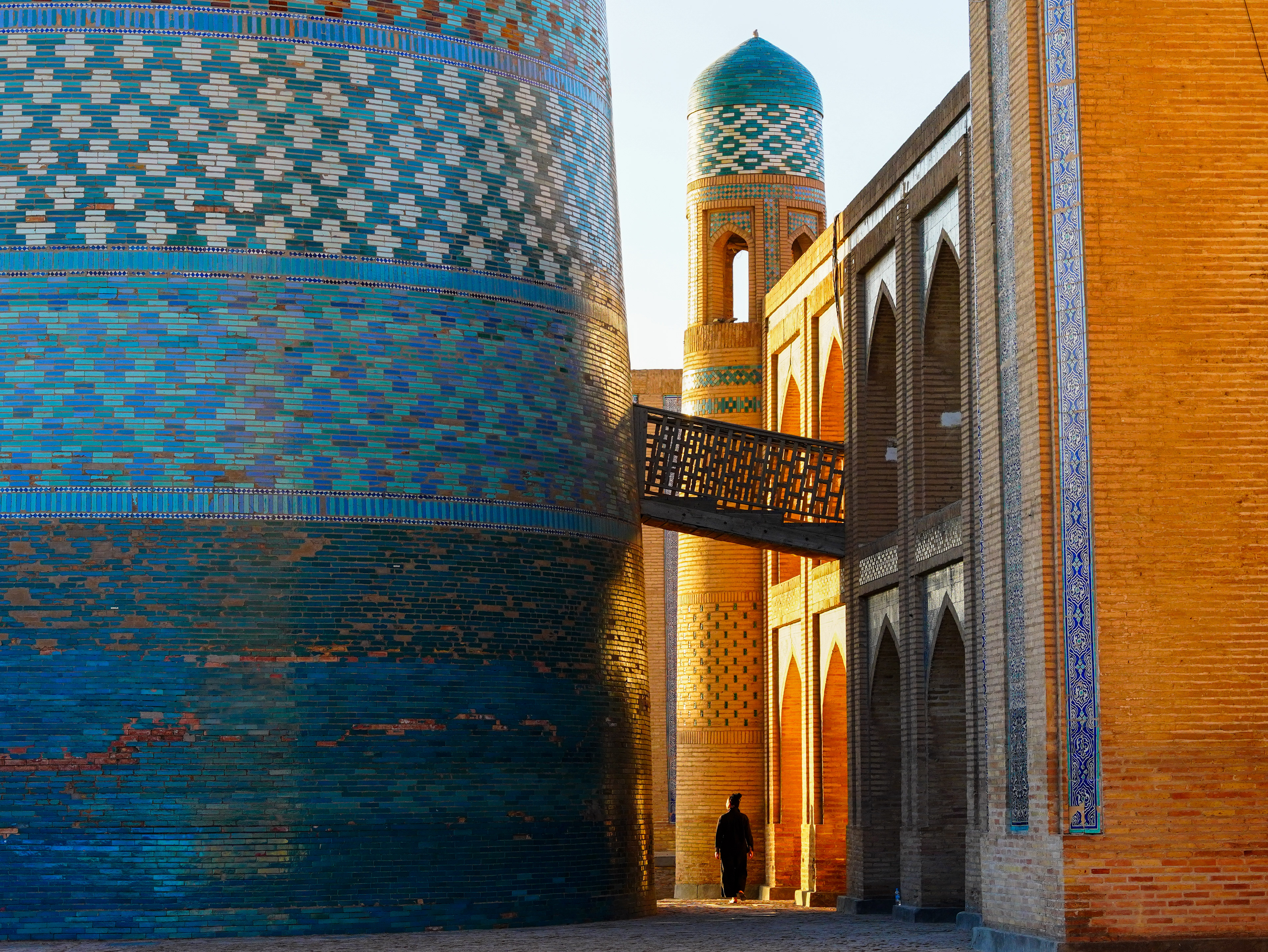
For centuries, the ancient cities of Uzbekistan stood at the crossroads of the Silk Road, where merchants, scholars, and travelers carried more than silk and spices. They exchanged ideas, beliefs, and knowledge that helped shape civilizations.
Behind the magnificent turquoise tiles and towering minarets lie stories of empires, conquests, and cultural encounters. Today, walking through these historic streets feels like stepping into a world where the past has never truly disappeared.
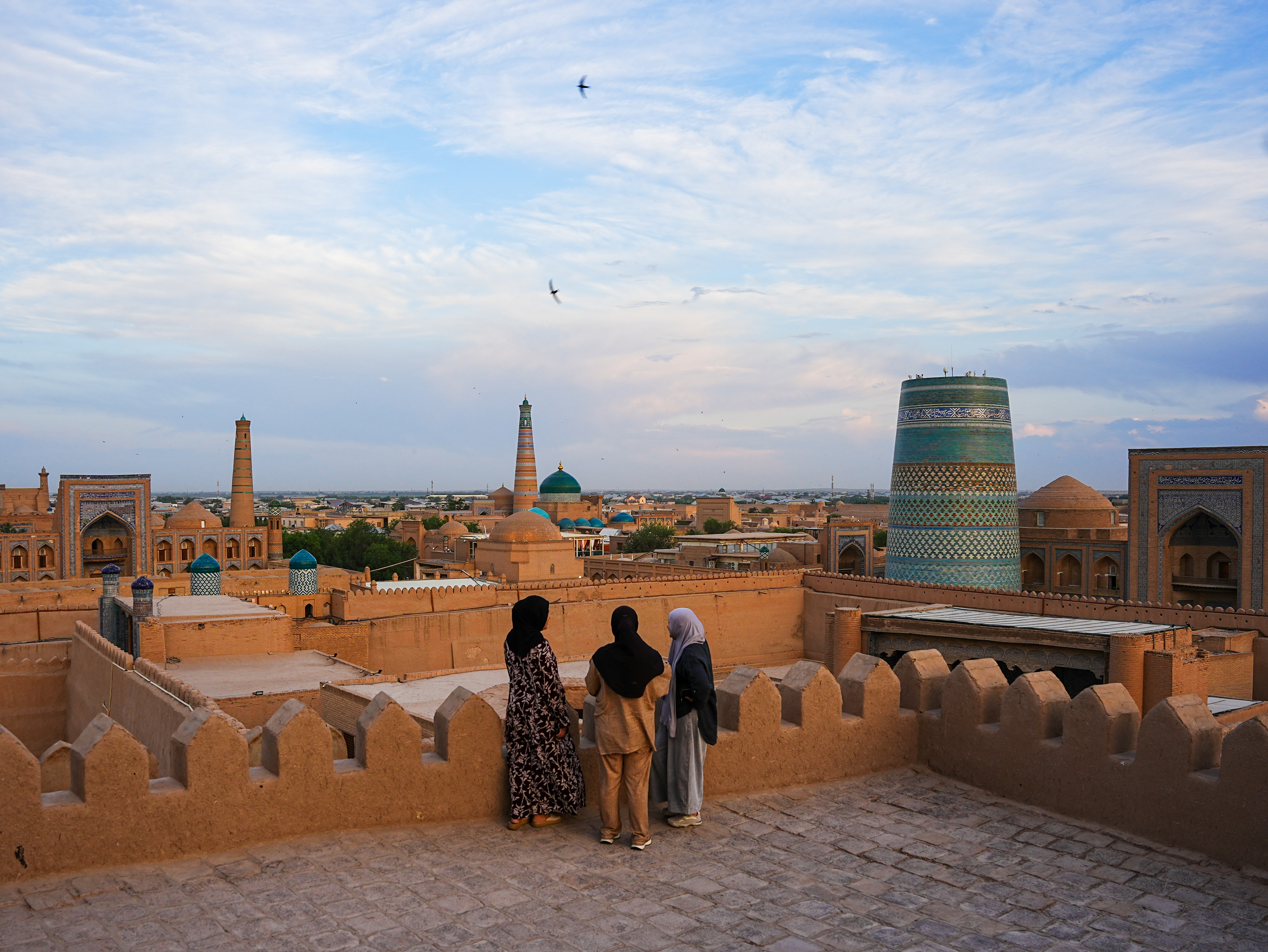
From the rooftops of Khiva, centuries of history unfold beneath the evening sky. Once an important trading center along the Silk Road, the city witnessed the passage of countless travelers, merchants, and civilizations.
Today, its ancient walls still surround a living city. Generations come and go, but the stories held within these streets continue to be passed on.
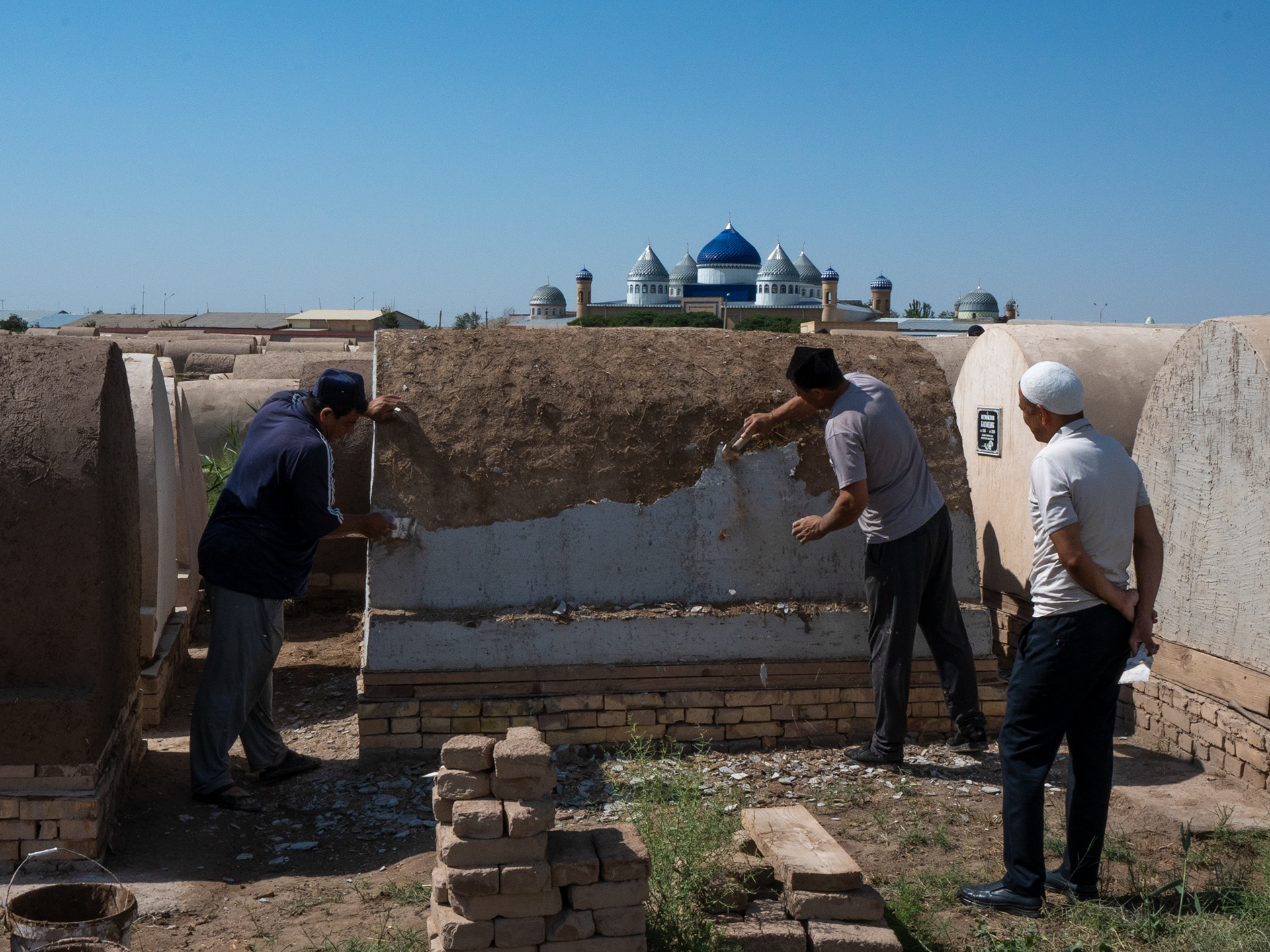
In Khiva, the dead are laid to rest in tombs built above the ground, resembling ancient sarcophagi. Constructed from earth and mud bricks, these distinctive graves are part of a centuries-old burial tradition.
Before religious holidays, families return to repair and renew the mud plaster covering their loved ones’ graves. Among them is a man who carefully restores his brother’s tomb, continuing a tradition of remembrance passed down through generations.
Here, remembering the dead is not only a matter of prayer, but also an act of care, love, and devotion.

In Uzbekistan, weddings are more than the union of two people. They are celebrations of family, community, and traditions passed down through generations.
Surrounded by centuries-old blue tiles, a bride and groom begin a new chapter of their lives. The contrast between the bride’s white dress and the intricate patterns of Islamic architecture reflects a country where ancient traditions and modern life exist side by side.
In a land once crossed by Silk Road caravans, new stories continue to unfold within the walls of history.
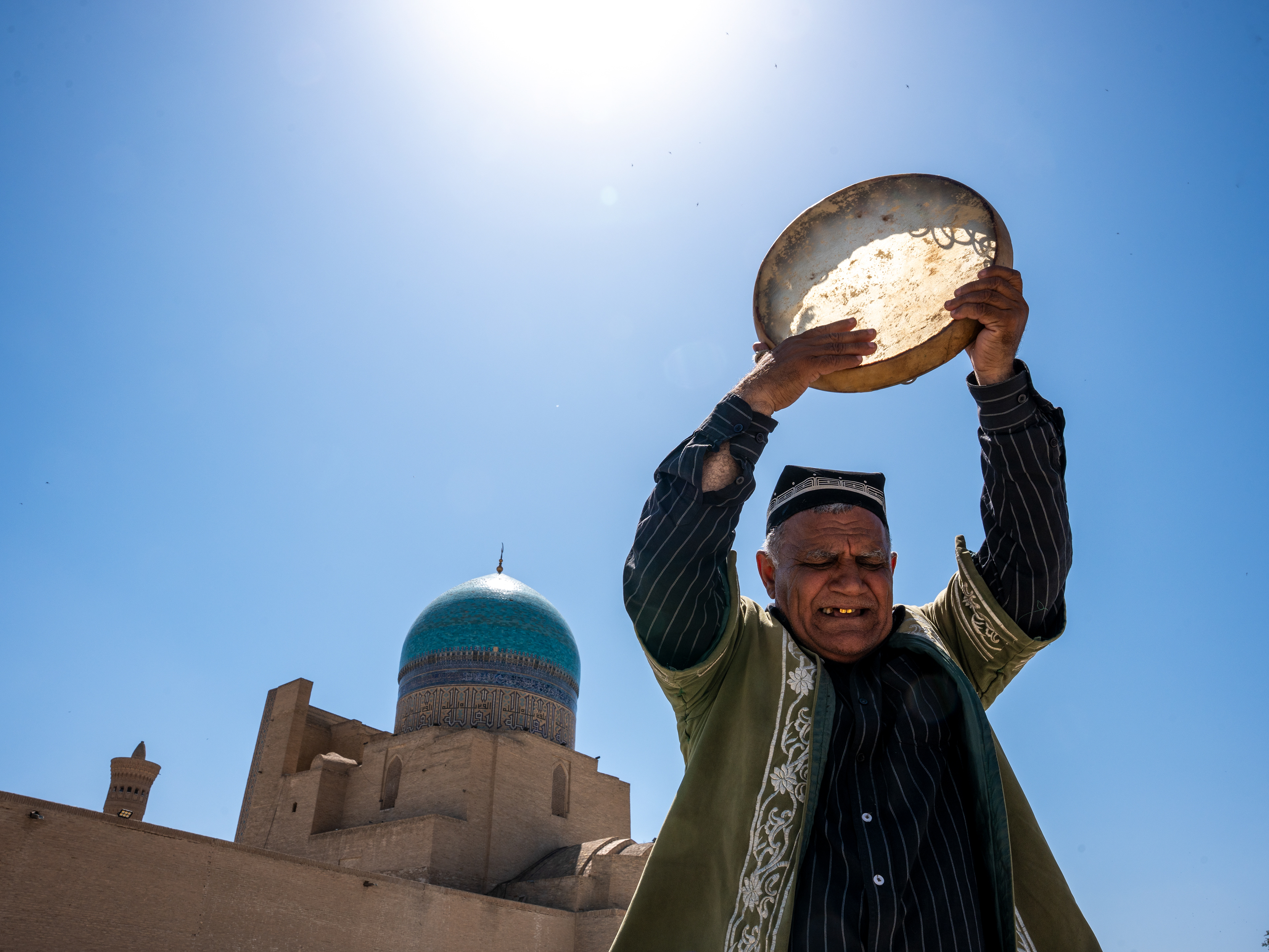
In the ancient cities of Uzbekistan, the sound of the doira, a traditional frame drum, has accompanied celebrations and gatherings for generations.
More than a musical instrument, the doira is an expression of cultural identity. Its rhythms carry the echoes of a past shaped by the Silk Road, where different peoples, beliefs, and traditions met.
As the musician raises his instrument toward the sky, an ancient sound continues to find its place in the present.
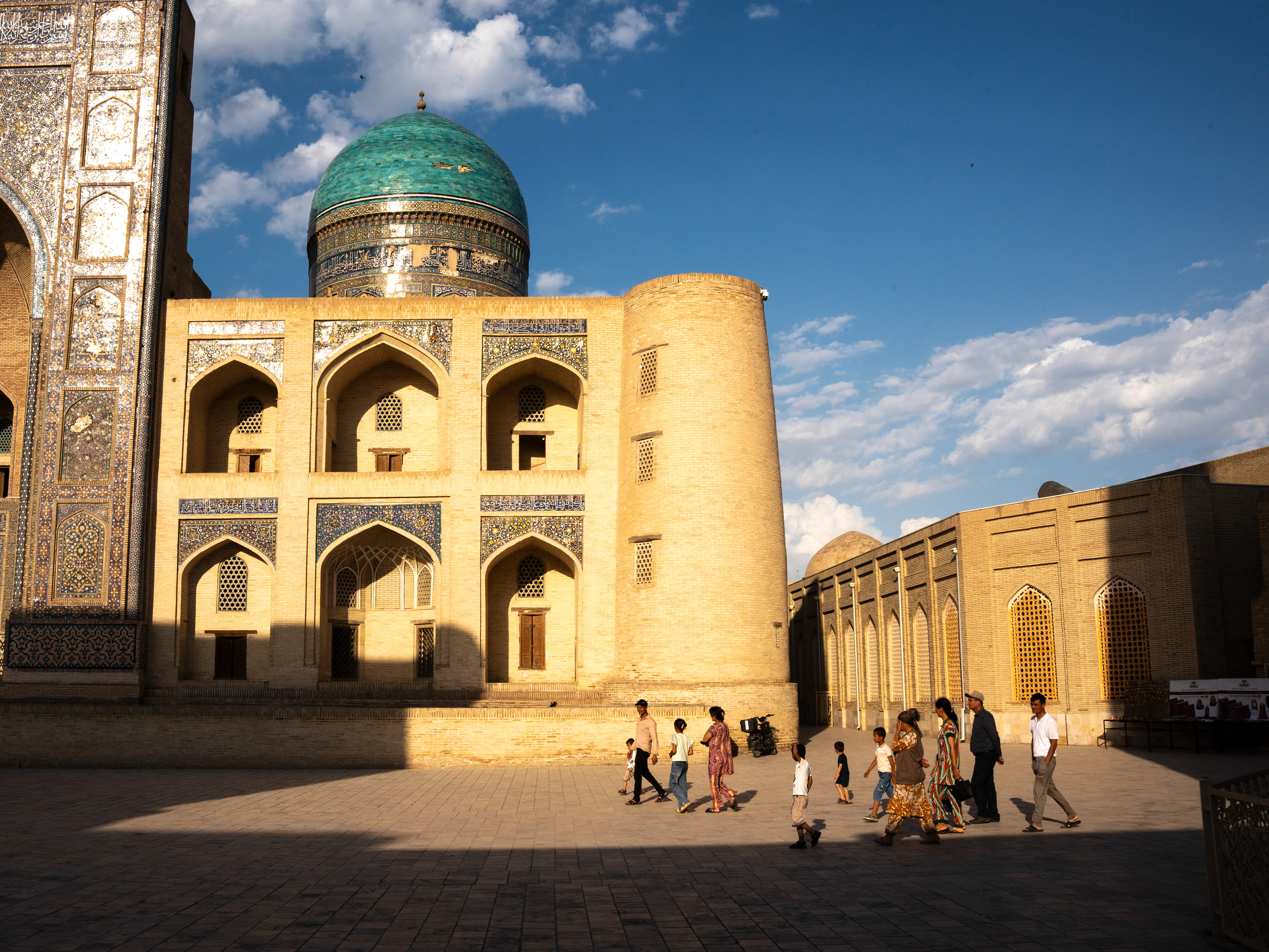
In Bukhara, centuries-old monuments are not merely reminders of a distant past. They remain part of the city’s everyday life.
Once an important center of trade, religion, and learning along the Silk Road, Bukhara brought together merchants, scholars, and travelers from different civilizations.
Today, families walk beneath the same turquoise domes that have watched over the city for centuries. Children grow up in the shadows of monuments that once witnessed the rise and fall of empires.
Here, history is not simply preserved. It continues to be lived.

For centuries, Registan Square stood at the heart of Samarkand, a crossroads where merchants, scholars, and travelers from distant lands exchanged goods, knowledge, and ideas.
Once a center of learning and trade along the Silk Road, the square now brings thousands of people together beneath its magnificent madrasas.
As night falls, colorful lights illuminate the centuries-old architecture, transforming the historic square into a gathering place.
The caravans have disappeared, but the spirit of the Silk Road lives on.
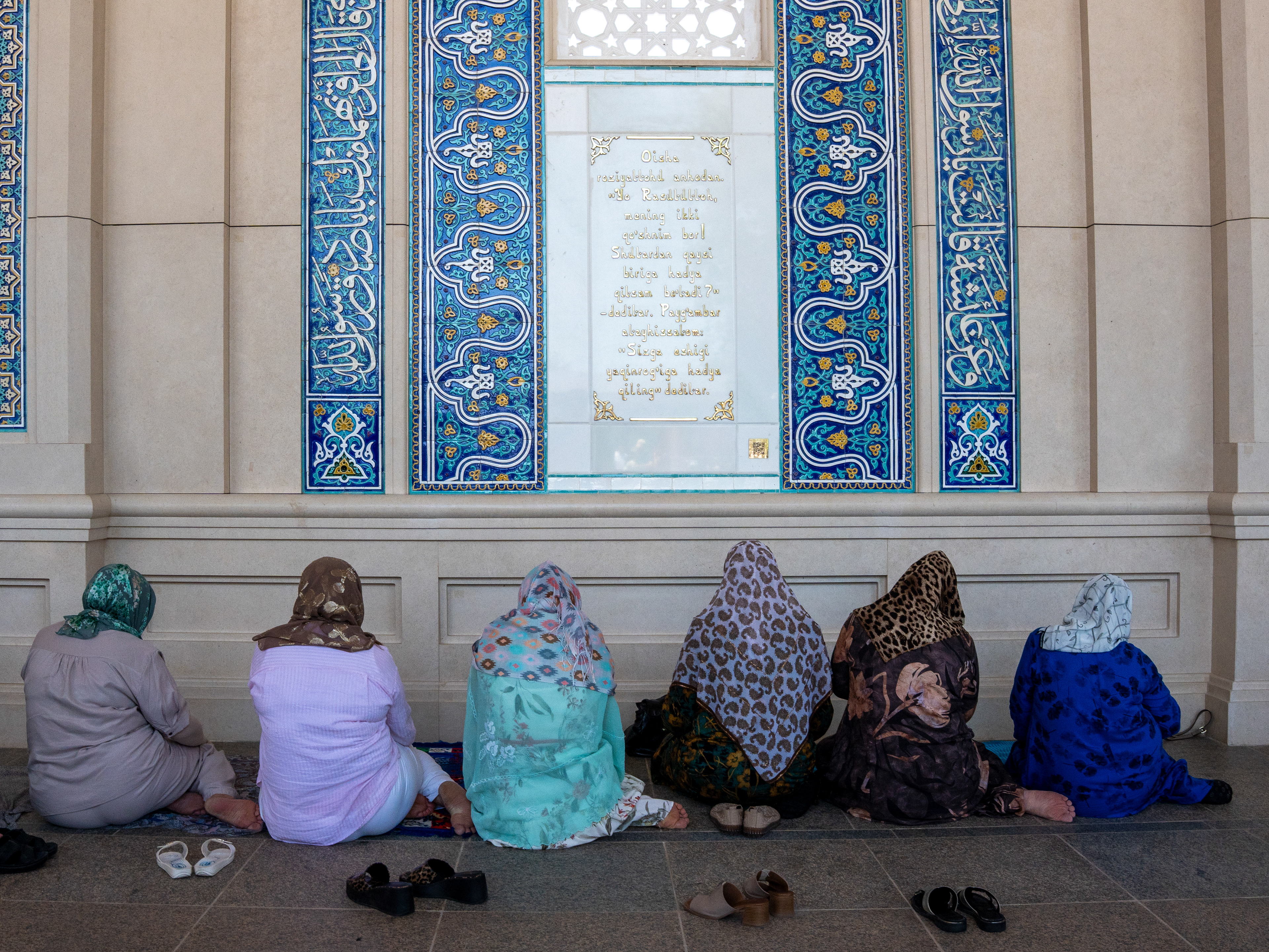
Along the ancient Silk Road, faith has remained an essential part of everyday life for centuries.
In a quiet corner of a sacred place, five women sit side by side in prayer. Their different generations and colorful garments reflect a tradition that continues to connect people through shared beliefs.
Empires have risen and fallen, cities have changed, but the spiritual heritage of this land continues to live through its people.

Shah-i-Zinda, meaning “The Living King,” is one of Samarkand’s most sacred and remarkable historical sites.
This ancient necropolis, with its magnificent turquoise domes and intricately decorated mausoleums, reflects centuries of Islamic art, architecture, and spiritual devotion.
According to tradition, the complex is associated with Qutham ibn Abbas, a cousin of the Prophet Muhammad.
For centuries, pilgrims have walked through these narrow passages, seeking a connection with the past and the sacred.
Here, every doorway leads to another chapter of history, and every blue tile carries the memory of a civilization.

Along the ancient walls of Khiva, women dressed in traditional costumes bring the colors and spirit of Central Asia’s cultural heritage to life.
For centuries, the Silk Road was more than a network of trade routes. It was a meeting place of civilizations, where traditions, beliefs, art, and stories traveled across borders.
Today, those traditions continue to find new expressions through music, dance, and everyday life.
The Silk Road may belong to history, but its stories are still being written.
And perhaps that is the greatest beauty of Uzbekistan: its past is not merely preserved in monuments, but lives on through its people.


