

In Burkina Faso, access to water shapes everyday life. From collecting and carrying water to the routines of families and children, these photographs explore the relationship between people, their environment, and one of life’s most essential resources.

An aerial view of Namassa reveals a settlement of mud-brick houses scattered across the dry landscape of Burkina Faso. The photograph offers a broader perspective on the environment in which the community lives.

In Namassa, Burkina Faso, women gather to prepare food over open fires. Surrounded by traditional mud-brick houses, communal cooking is part of everyday life, bringing generations together.

In Namassa, Burkina Faso, a woman prepares food while carrying her child on her back. The scene reflects the close connection between motherhood, childcare, and everyday household responsibilities.
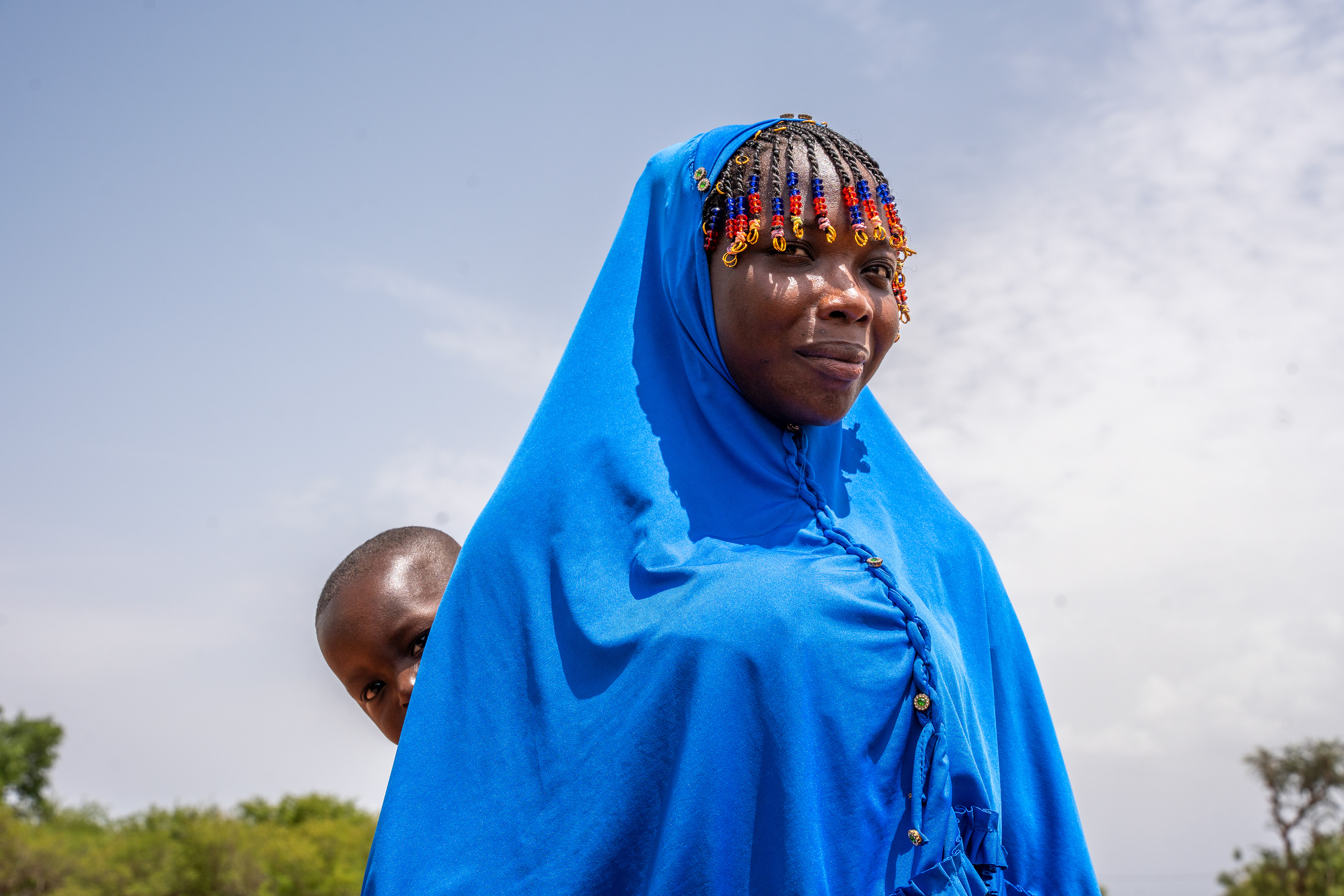
A woman dressed in a vibrant blue garment stands with a child peeking out from behind her in Namassa, Burkina Faso. Her colorful beaded hairstyle and traditional clothing reflect the cultural identity of the community.

Young girls sit in a classroom in Namassa, Burkina Faso. Dressed in colorful headscarves, they reflect another dimension of everyday life in the community, where education is part of the younger generation’s experience.
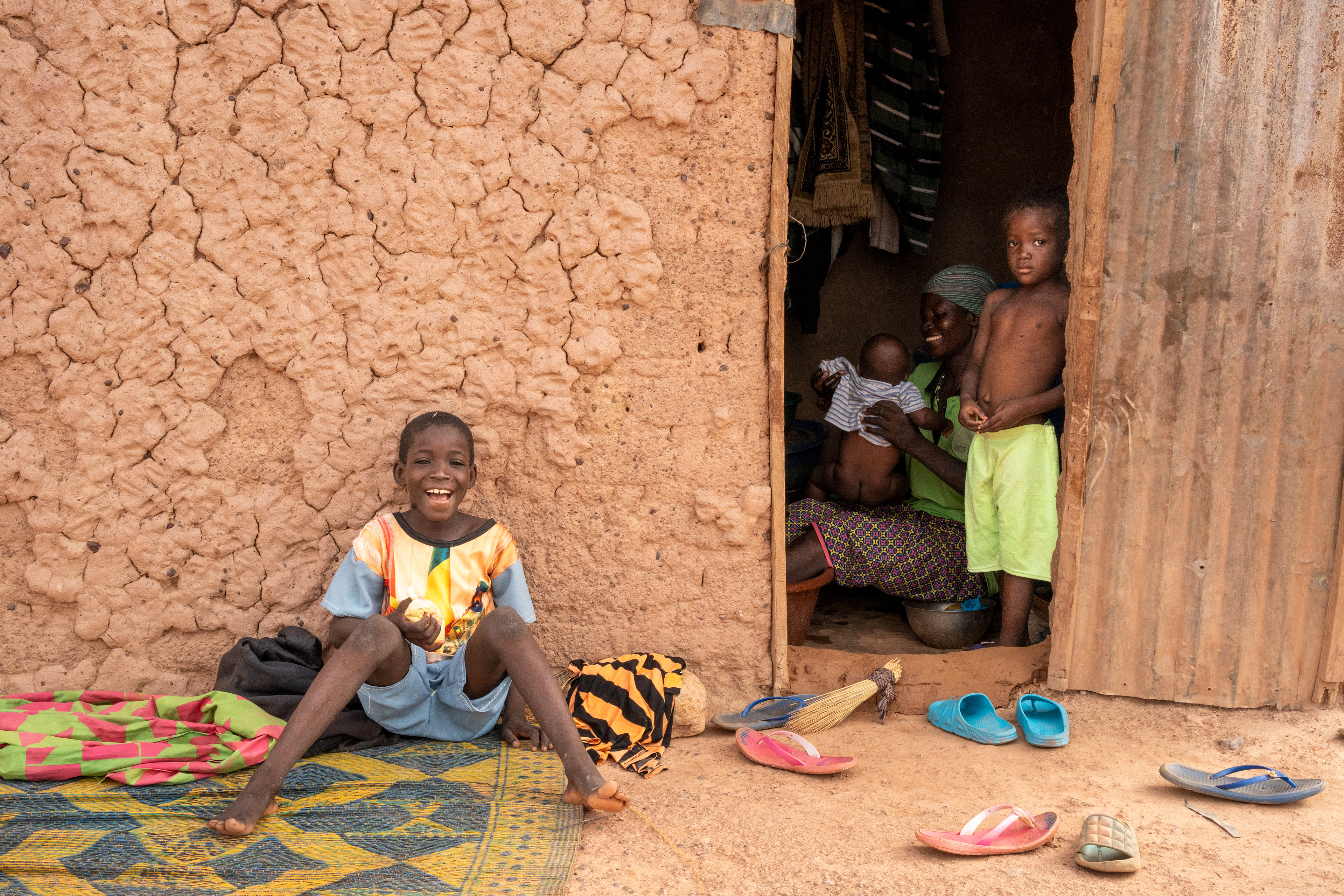
Outside a mud-brick home in Namassa, Burkina Faso, a smiling boy sits on a mat while a woman and two younger children remain in the doorway. The scene offers an intimate glimpse into family life and everyday moments in the community.

A young child sits in the doorway of a mud-brick home in Namassa, Burkina Faso, looking directly at the camera with one hand raised. Soft natural light illuminates the child’s face against the dark interior.

Two young girls carry large basins on their heads through the dusty streets of Namassa, Burkina Faso. Carrying water and other household supplies is part of daily life in the community, where children often help with everyday tasks.

In Namassa, Burkina Faso, two women pound grain using traditional wooden mortars and pestles, while a young girl works nearby. The scene reflects the role of traditional food preparation methods in the community’s everyday life.
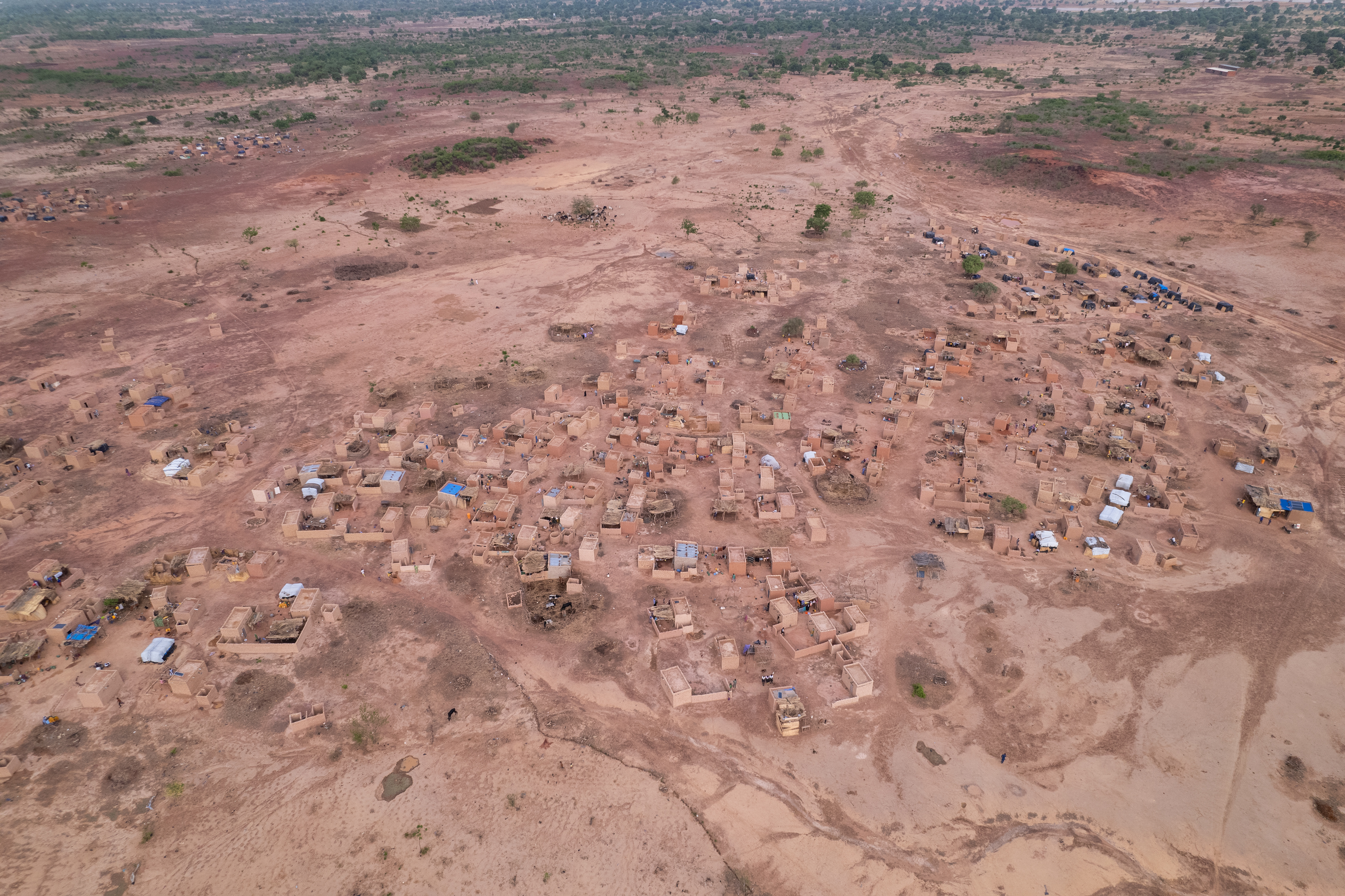
An aerial view of Namassa, Burkina Faso, reveals hundreds of mud-brick houses spread across a vast, dry landscape. The settlement is surrounded by sparsely vegetated land, illustrating the geographical conditions in which the community lives.

Beyond the dry landscapes and the challenges of everyday life, Namassa is a place of resilience, traditions, and human connections. In the faces of its children, the strength of its women, and the rhythms of daily life, a story unfolds — one of dignity, hope, and a community shaping its future.


